
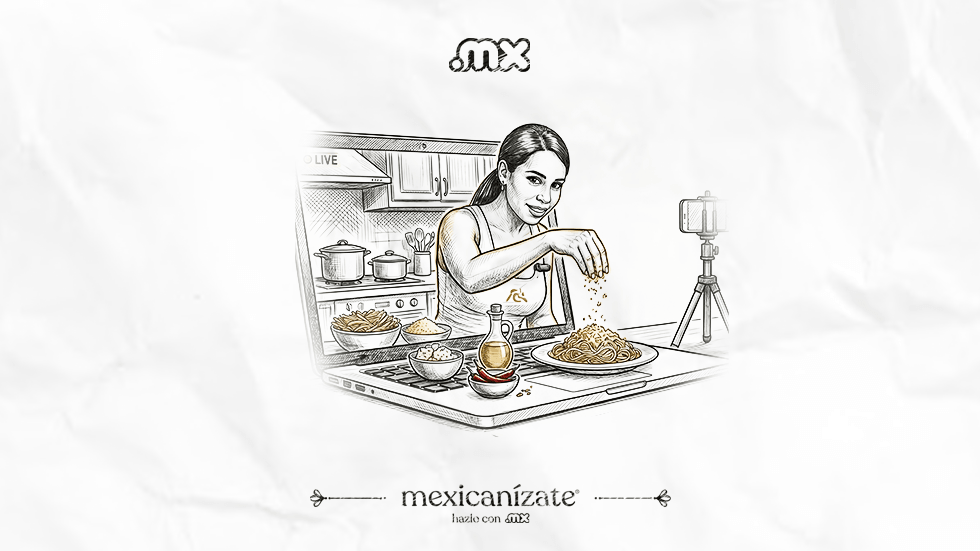
For generations, Mexican cuisine has been a gathering place. A space where stories are told without words, where recipes are shared among family, and where food becomes the center of everything. Eating is not just a necessity: it is a way to spend time together, to celebrate, and to build collective memory around the table.
Today, that gathering place hasn’t disappeared; it has simply expanded. Mexican cuisine also lives in the digital realm: in videos, social media, blogs, and communities where thousands of people share a common passion a love of food. What once took place in a kitchen or dining room now also happens on a screen, allowing those same traditions to find new ways to be shared.
This change does not replace the traditional experience; it amplifies it. It makes it possible for a recipe, a recommendation, or even a craving to travel much farther, connecting people who, though in different places, share the same relationship with food.
A Culture That Is Also Built Online
Digital gastronomy isn’t limited to sharing recipes. It has become a form of cultural expression where identity, creativity, and community intersect. In Mexico, this is evident in the type of content that circulates every day, from debates over whether a quesadilla should contain cheese, to market tours, recommendations for local eateries, or videos documenting the richness of street food.
This type of content not only entertains but also sparks conversation. Food becomes a common language that allows people to express their opinions, share experiences, and connect through what they know and enjoy. In this process, dishes cease to be merely something to be consumed and become symbols representing customs, regions, and ways of understanding cuisine.
That is why gastronomy on the Internet is not just observed; it is experienced, discussed, championed, and shared with a level of participation that did not exist before.
Learning, Sharing, and Reinterpreting
One of the most significant changes brought about by the digital age is the way we learn to cook. For a long time, recipes were passed down primarily within the family, handed down from generation to generation through practice and memory.
Today, that knowledge is available to anyone. A person can learn to prepare a Mexican dish from anywhere in the world by following tutorials, step-by-step recipes, or content created by other cooking enthusiasts. This has not only democratized access but has also expanded the possibilities for experimentation.
Because in the digital world, cooking also means reinterpreting. Each recipe is adapted, adjusted, and transformed depending on who prepares it. Thus, a single dish can have multiple versions that coexist in the same space, enriching tradition rather than limiting it.
From Content to Community
Many food-related projects have emerged directly from this digital space. What began as accounts for sharing recipes or recommendations has now evolved into strong communities with thousands or even millions of followers.
However, what matters most isn’t the number, but the connection that’s formed. People from different cities, countries, or generations find common ground through food. They interact, make recommendations, share experiences, and build relationships based on something as everyday as choosing what to eat.
In the case of Mexico, this connection has an even deeper meaning. Gastronomy is not just a daily practice; it is a cultural expression that fosters identity and pride. That is why every digital conversation about food is also a way of belonging.
An Industry That Is Also Evolving
This phenomenon does not occur in isolation. It is part of an industry that continues to grow and adapt to new consumer trends.
The restaurant industry in Mexico comprises more than 650,000 establishments and generates nearly 2 million direct jobs, making it one of the country’s most significant economic sectors. Furthermore, interest in Mexican cuisine continues to grow internationally, driven by both tourism and digital outreach.
This growth is also reflected in the way people consume food today. According to AMVO, 54% of users in Mexico have purchased prepared meals online in 2025, confirming that the digital environment influences not only how we discover cuisine, but also how we consume it.
Today, the way people discover a restaurant, choose what to eat, or decide to try a new dish is deeply influenced by what they see online. Recommendations, visual content, and digital presence have become key factors in the dining experience.
An Identity That Also Lives Online
In this new context, a digital presence not only serves a practical purpose but is also an integral part of every culinary project’s identity. Websites, social media, and digital platforms have become spaces where brands, creators, and restaurants tell their stories and build their offerings.
The domain they use also conveys a message. A .MX domain is not just an Internet address; it is a clear signal of origin. It is a way of saying that behind that content lies a story born in Mexico, with all that this implies in terms of culture, tradition, and creativity.
In an environment where food constantly travels between cultures, maintaining that link to its origin becomes a distinguishing factor that adds value and authenticity.
Digital gastronomy demonstrates that Mexican cuisine is not only still relevant but continues to evolve alongside new forms of communication. Every shared recipe, every recommendation, and every piece of content is part of a conversation that keeps growing.
What remains intact is its essence and its ability to bring people together. Only now, in addition to the dining table, there is a digital space where that connection happens every day, regardless of distance.