
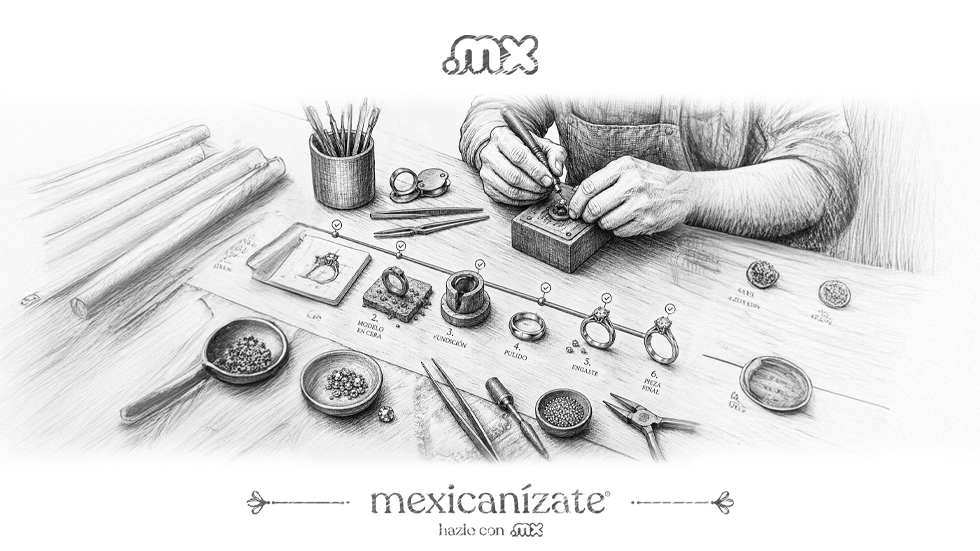
In Mexico, handicrafts are not merely decorative objects or handmade pieces; they represent identity. They are a way to preserve a community’s memory, to pass down knowledge that has been handed down from generation to generation, and to keep alive techniques that are part of the country’s cultural history.
Every Mexican craft has something that makes it unique. Sometimes it is the color of the natural dyes, other times the texture of the clay, the precision of the embroidery, or the way the wood comes to life in the hands of a craftsman. But behind every piece lies something even more important: its origin.
Because Mexican crafts are born from the land. From the materials each region offers, from the customs that have stood the test of time, and from the creativity of communities that have learned to transform their surroundings into pieces full of meaning.
To speak of crafts in Mexico is to speak of cultural diversity. Of textiles in Chiapas, black pottery in Oaxaca, talavera in Puebla, natural fibers in Yucatán, or handmade jewelry in Guerrero and Jalisco. Each region contributes distinct techniques, symbols, and processes that make Mexican crafts one of the country’s richest cultural expressions.
Tradition That Also Drives the Economy
In addition to their cultural value, handicrafts represent a vital economic activity for millions of Mexican families. During the second quarter of 2024, the handicraft workforce in Mexico reached 6.54 million people, reflecting the scale and impact of these trades within the country.
Behind every workshop, market, or cooperative lies a network of people who depend on these processes to generate income and sustain their communities. States such as the Estado de Mexico, Jalisco, and Veracruz are home to some of the largest numbers of artisan workers, establishing the sector as a major source of employment and local development.
Handicrafts also play a significant role in Mexico’s cultural economy. The cultural sector contributed more than 820 billion pesos to the national GDP, and within it, handicrafts account for nearly 19.1% of that total. This demonstrates that preserving traditions also means fostering creative industries with real economic impact.
But perhaps most importantly, each piece preserves something that is increasingly valuable today: authenticity. In an environment where many products seek to standardize, handicrafts maintain their essence precisely because each piece is unique.
Handmade Goods Find New Ways to Reach a Wider Audience
For a long time, many artisanal businesses relied solely on tourism, local fairs, or physical markets to promote their work. Today, the digital landscape has completely transformed that reality.
Nowadays, a craft workshop can showcase its work on social media, sell pieces through an online store, or connect with buyers anywhere in the world without the need for intermediaries. What once remained within a community can now travel much farther while preserving its history and identity.
This shift has also enabled new collaborations between artisans, designers, and contemporary brands seeking to integrate traditional techniques into modern designs. Mexican crafts have found new ways to evolve without losing what makes them special.
The Iinternet has also helped people place greater value on the origin of what they consume. Today, many buyers aren’t just looking for a product; they want to know who made it, how it was created, and what story lies behind each piece.
Origin is also communicated digitally
In this new landscape, a digital presence has become a vital part of the growth of many artisanal projects. Having a website no longer serves merely as a catalog or point of sale; it also allows you to tell the story behind each creation and build a community around the project.
And in that space, origin remains key. Because when a Mexican artisanal brand goes online, it doesn’t just showcase its products. It also communicates where it comes from, what it represents, and the tradition that gives it its identity.
That’s where a .MX domain becomes relevant. It’s not just a web address; it’s a way to reinforce the connection to Mexico and make it clear that behind those pieces lies talent, history, and creativity born in the country.
In a global market where thousands of products compete for attention, origin becomes a powerful differentiator. And Mexican crafts have something few industries can replicate: an authentic connection between culture, territory, and tradition.
Crafts That Evolve Without Losing Their Essence
Mexican crafts continue to transform every day. New generations of artisans are reinterpreting traditional techniques, exploring new formats, and bringing these crafts into contemporary spaces without severing their ties to their roots.
That is precisely what keeps Mexican craftsmanship alive: its ability to adapt while remaining authentic. Because beyond the technique or the material, what makes a handcrafted piece special is the story it represents. The connection to the people who create it, to the communities that preserve it, and to the place from which it comes.
And today, thanks to the digital world, those stories can reach further than ever before. Because when Mexican talent finds a space on the Internet, it also deserves to proudly bear the name that represents its origin.